




















How to Clean & Sanitize a Dish Brush (So It Doesn't Smell) | Ecozoi
There is nothing worse than reaching for your dish brush to clean a pot, only to be met with a stubborn, musty odor that lingers on your hands and kitchen counter. It raises an immediate concern: if the tool you use to wash your plates and cookware is harboring bacteria, how clean are your dishes really?
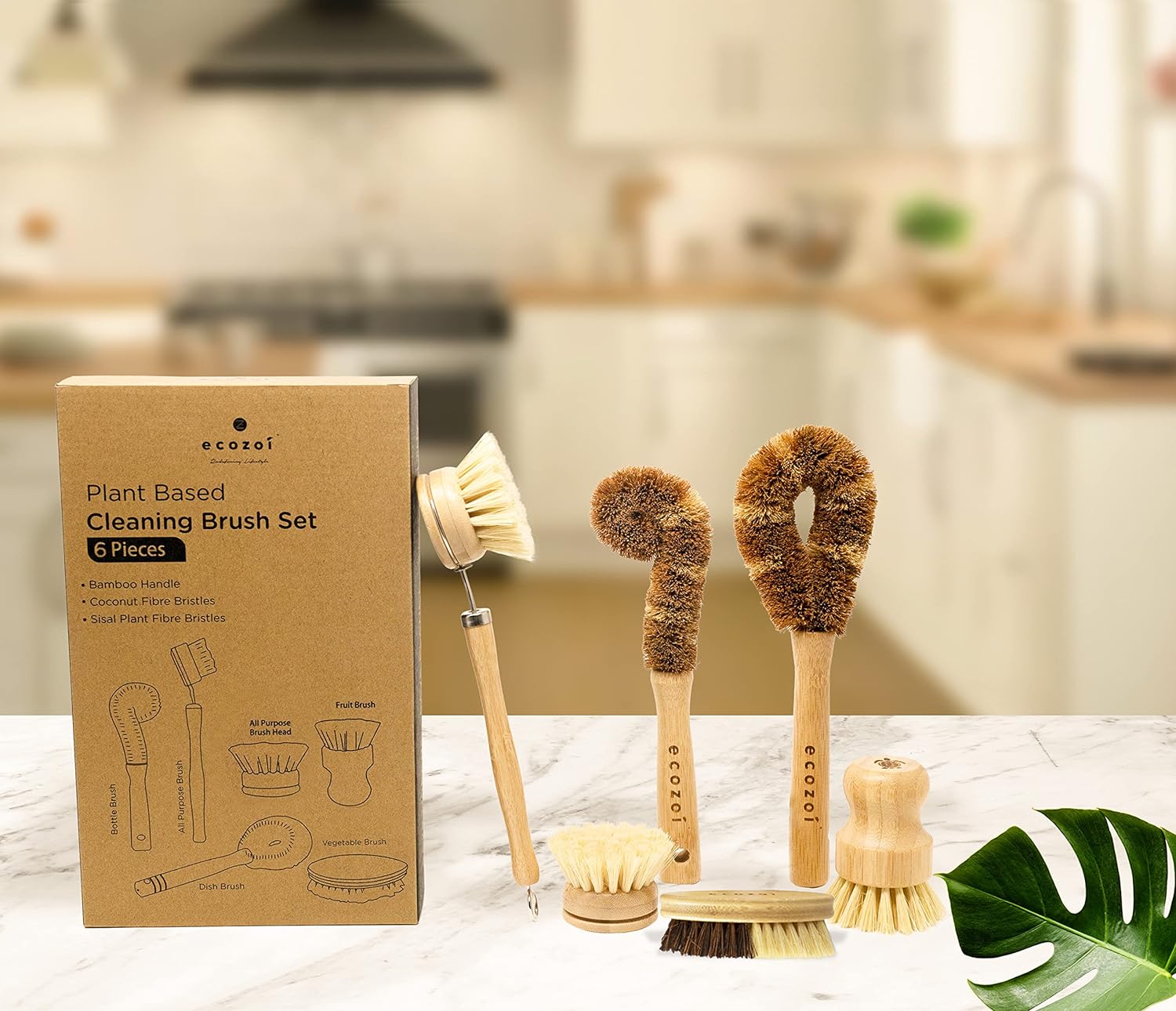
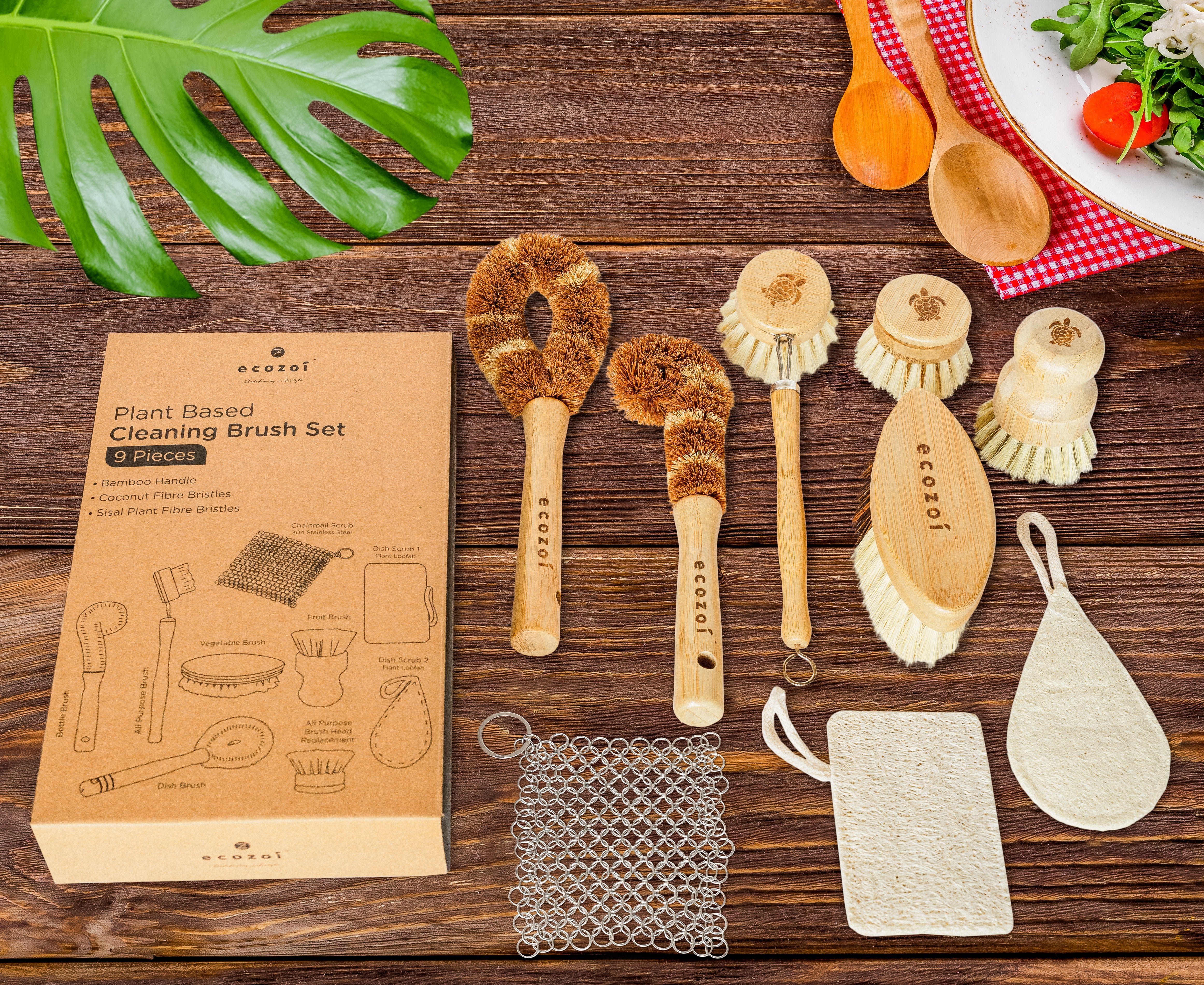
Kitchen scrubbing brushes are indispensable in sustainable households. Unlike synthetic plastic sponges that break down into microplastics after a few weeks, high-quality eco-friendly brushes such as those in our Ecozoi 9-Piece Plant-Based Cleaning Brush Set are designed to last for months when cared for properly. However, because dish brushes regularly come into contact with grease, oils, and food debris, they require routine sanitization to stay odor-free and hygienic.
In this ultimate guide, you will discover simple, step-by-step methods for cleaning kitchen brush heads, deep-sanitizing natural bristles, and maintaining your scrubbing tools so they stay germ-free and fresh for the long haul.
Why Does Your Dish Brush Smell Musty?
Understanding why your scrubber develops a sour odor is the first step toward stopping it. The culprit behind that stale smell is almost always a combination of three factors: trapped food particles, excess moisture, and microbial activity.
When you scrub pots and plates, microscopic food debris gets lodged deep at the base of the bristles. If the brush is left face down in a wet sink basin or stored in a crowded cup, water pools at the base. Dark, warm, and humid environments are ideal breeding grounds for yeast, mold, and bacteria like Pseudomonas and E. coli. As these microorganisms feed on organic matter, they release volatile organic compounds (VOCs) which you smell as that unpleasant, damp odor.
Whether you are using a standard brush or natural plant-fiber bristles like coconut coir and sisal, learning how to clean scrubbing brush tools properly keeps your kitchen safe and hygienic.
Step-by-Step Guide: How to Clean and Disinfect Cleaning Brushes
To eliminate odors and eradicate grease, adopt a simple two-phase cleaning process: an instant daily rinse followed by a weekly deep soak. Here is the foolproof routine for cleaning kitchen brush gear effectively.
Step 1: The Instant Post-Use Pre-Rinse
Never allow grease or dish soap to dry inside the bristles. Immediately after finishing dishes, rinse the brush head under hot running water. Flick the bristles with your thumb to dislodge trapped food specks and soap suds.
Step 2: The Hot Soap & Degreasing Bath
Fill a glass jar or small bowl with hot water and add a few drops of plant-based liquid dish soap or Castile soap. Submerge the bristles into the liquid and swirl vigorously for 30 seconds. This step breaks down stubborn oils and fats that accumulate around the bristle base.
Step 3: Disinfect & Sanitize (The Vinegar Soak)
To kill lingering bacteria and mold spores, mastering how to disinfect a dishwashing brush is key. Mix equal parts hot water and distilled white vinegar in a cup. Submerge the bristle head into the vinegar solution and let it soak for 10 to 15 minutes. White vinegar contains natural acetic acid, a non-toxic antimicrobial agent that neutralizes odors and dissolves mineral buildup without damaging natural bristles.
Step 4: Proper Drying (The Ultimate Smell Prevention Secret)
Your drying technique is what truly prevents stink! After rinsing out the vinegar, shake off excess water thoroughly. Place the brush bristle-side down on a breathable drying rack or hang it by its cord in a well-ventilated, dry area. Never store a wet brush flat on its side or face-up on a solid countertop, as gravity will draw trapped water into the handle block, encouraging mold and rot.

How to Clean Dish Brush Without Vinegar
If you don't have white vinegar on hand or dislike its sharp scent you can still achieve a deep sanitize. Here are three effective, eco-friendly alternatives for how to clean dish brush without vinegar:
● 3% Hydrogen Peroxide Soak: Hydrogen peroxide is a powerful natural disinfectant and oxygenating agent. Pour enough 3% hydrogen peroxide into a small glass to cover the bristles. Soak for 10 minutes. The solution fizzes as it oxidizes bacteria and organic matter, leaving bristles clean and disinfected. Rinse thoroughly with warm water.
● Baking Soda & Soap Scrub: Baking soda (sodium bicarbonate) is a natural deodorizer and mild abrasive. Mix 2 tablespoons of baking soda with 1 tablespoon of liquid soap and warm water to form a gentle paste. Work the paste deep into the bristle base using your fingers, let it sit for 15 minutes, then rinse clean.
● Lemon & Coarse Salt Degreaser: Squeeze fresh lemon juice into a bowl of warm water and add a tablespoon of coarse sea salt. Swirl the brush in the mixture. The natural citric acid breaks down sticky grease and neutralizes odors, while the salt provides extra scrubbing action.
Special Care for Eco-Friendly Gear: How to Clean a Bamboo Dish Brush
Plant-based brushes made with bamboo handles and natural fibers (such as sisal or coconut coir) require slightly different care than plastic options. Bamboo is naturally antimicrobial and fully biodegradable, making products like our Ecozoi 6-Piece Plant-Based Cleaning Brush Set a favorite for sustainable kitchens.
Because wood absorbs moisture, follow these golden rules when learning how to clean a bamboo dish brush:
- Avoid Long Soaks: Never submerge the wooden handle in water for extended periods. Soak only the bristles. Submerging bamboo leads to swelling, cracking, and dark mold growth inside the wood grain.
- Keep Away from the Dishwasher: The intense heat and prolonged moisture cycle of a dishwasher will warp bamboo and strip away its natural protective oils. Always hand-wash bamboo tools.
- Condition the Bamboo Handle: Once a month, rub a few drops of food-grade mineral oil or beeswax onto the bamboo handle to maintain its water resistance and natural luster.
- Use Replaceable Brush Heads: Ecozoi's dish brushes feature replaceable heads. When bristles eventually wear down after months of heavy use, simply unclip the old head and pop on a fresh plant-fiber head while keeping your durable bamboo handle intact!

Pro Maintenance Tips: Extend Your Kitchen Brush Lifespan
Adding a few quick habits to your routine keeps your kitchen brush cleaner and longer-lasting:
● Rotate Your Brushes: Keep dedicated brushes for specific tasks. Use a sturdy coconut coir palm scrubber for heavy pots, a long-handle sisal brush for plates, and a narrow bottle brush for glassware. Explore our full Ecozoi Eco-Friendly CleaningWare Collection to build your ideal zero-waste setup.
● Harness Direct Sunlight (Natural UV Disinfection): Sunlight is a free, natural disinfectant. Placing your freshly washed brushes on a sunny windowsill allows UV rays to destroy remaining bacteria naturally.
● Cross-Clean All Wooden Kitchen Tools: If you love natural kitchen tools, proper drying and sanitizing habits apply to all wooden items!
Check out our guide on How to Get Rid of Bamboo Cutting Board Smell (Garlic and Onion), How to Clean a Thermos Food Jar: Mold & Odor Removal Guide, How To Care For Your Stainless Steel Lunch Box: Stop Rust & Stains to keep your entire kitchen germ-free.

FAQs
1. Can you put a dish brush in the dishwasher?
Answer: It depends on the material. Plastic dish brushes can usually go on the top rack of a dishwasher for sanitization. However, bamboo or wooden dish brushes should never go in the dishwasher. High heat, heavy detergents, and prolonged steam cycles will warp, crack, and mold natural wood. Hand-soak bamboo bristles in warm vinegar or hydrogen peroxide water instead.
2. How to disinfect a dishwashing brush?
Answer: To disinfect cleaning brushes effectively, soak the bristles in a solution of 1 part distilled white vinegar to 1 part warm water (or 3% hydrogen peroxide) for 10 to 15 minutes once a week. Rinse thoroughly with warm water and shake off excess moisture. Always hang or place the brush bristle-side down in a well-ventilated spot to air dry completely.
3. How to clean dish brush without vinegar?
Answer: If you don't have vinegar, soak the bristle head in a glass of 3% hydrogen peroxide for 10 minutes. Alternatively, make a cleaning bath with hot water, 2 tablespoons of baking soda, and a few drops of natural liquid dish soap. Swirl the brush to break down grease and neutralize odors before rinsing thoroughly with clean water.
4. How to clean a bamboo dish brush?
Answer: Clean a bamboo dish brush by soaking only the bristles in a mix of warm water and mild liquid soap or vinegar. Never submerge the entire bamboo handle in water for long periods. After cleaning, shake out excess water and hang or rest the brush bristle-side down in a dry, ventilated area. Periodically condition the handle with food-grade mineral oil to protect the wood from moisture.
5. How often should I change my dish brush?
Answer: Natural fiber dish brushes typically last between 3 to 6 months with regular sanitization and proper drying. You should replace the brush head when the bristles become permanently frayed or matted, or if an odor persists despite deep cleaning. With Ecozoi's replaceable head dish brushes, you can simply swap out the head without throwing away the bamboo handle!
Conclusion: Keep Your Cleaning Tools Fresh & Zero-Waste
A fresh, odor-free dish brush is essential for maintaining a clean and healthy kitchen. By spending just two minutes a week to deep-clean, soak, and properly dry your scrubbing tools, you prevent bacterial buildup, stop unpleasant odors in their tracks, and double the lifespan of your eco-friendly brushes.
Ready to upgrade your dishwashing routine without plastic waste? Discover our Ecozoi Plant-Based Cleaning Brush Collection today for natural, durable, and 100% compostable scrubbing power that keeps your home sparkling clean!


